“Sometimes the best journeys are those, that start when we do not plan, continue how we do not expect and are taking us places we do not know.” – Aisha Mirza
In early February 2019, I left Warsaw with a week to float around Poland before going to Krakow. I could have gone to Krakow early, but where’s the fun in that? Sure, there was stress in deciding where to go last minute. I mean, getting train tickets, a hostel reserved, not knowing a city …. but it was fun and exciting picking a random place.
Looking at the map, I tried to pick a city en route to Krakow with at least 3 days of things to do, maybe. So… I picked Łódź. As the hostel staff in Warsaw described it, Łódź is rarely visited by tourists because it is an old manufacturing town that is in the process of being gentrified to attract more people. Also, the staff helped me learn the proper pronunciation of the city because it “has all the fun parts of Polish”. Woodge. It’s pronounced Woodge.
After arriving in Łódź, I learned that it’s home to a prominent film school that houses a great museum, but the museum didn’t open until the spring. The city has a sewer museum which is a 142-meter brick tunnel created in 1926 as one of the first sections of the city drainage system that you can walk through. It, too, opens only in the spring. Basically, there are several interesting things to do in Łódź, in the spring. This was a bummer to realize but gives me an excuse to come back another time… possibly in the spring.
Pro Tip: Visit Łódź between May and September in order to take advantage of all Łódź has to offer.
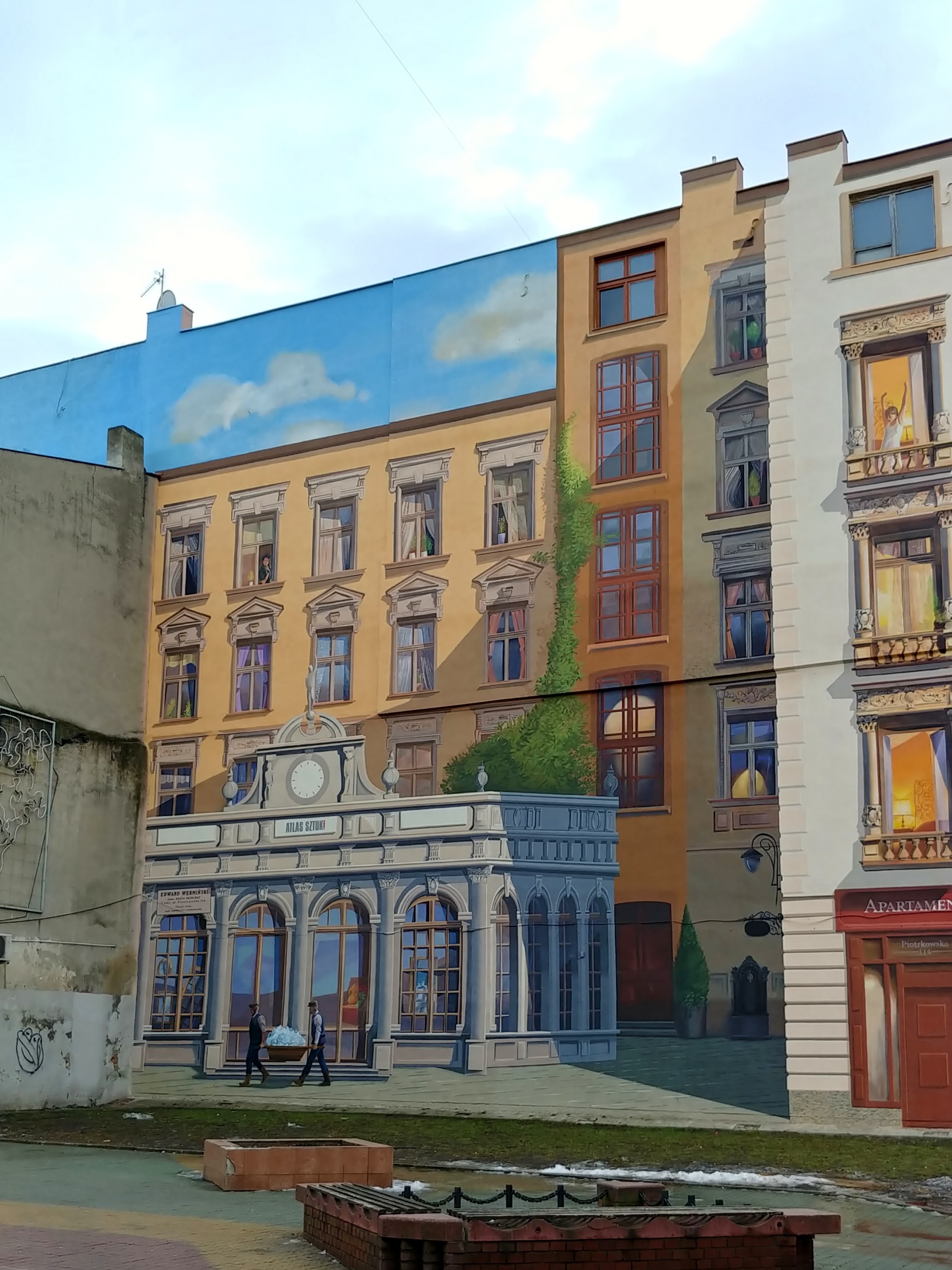
The majority of my time in Łódź was uneventful since a lot of museums and such were closed. I did wander the city through the longest pedestrian street in Poland (and apparently in Europe), Piotrkowska Street, taking in the local stores and restaurants. The street was mostly under restoration and renovation until… the spring, but it was gorgeous and was home to many street murals. The city allows artists to beautify some of the old buildings through the use of street art. I spent hours drinking tea or coffee and admiring the art.
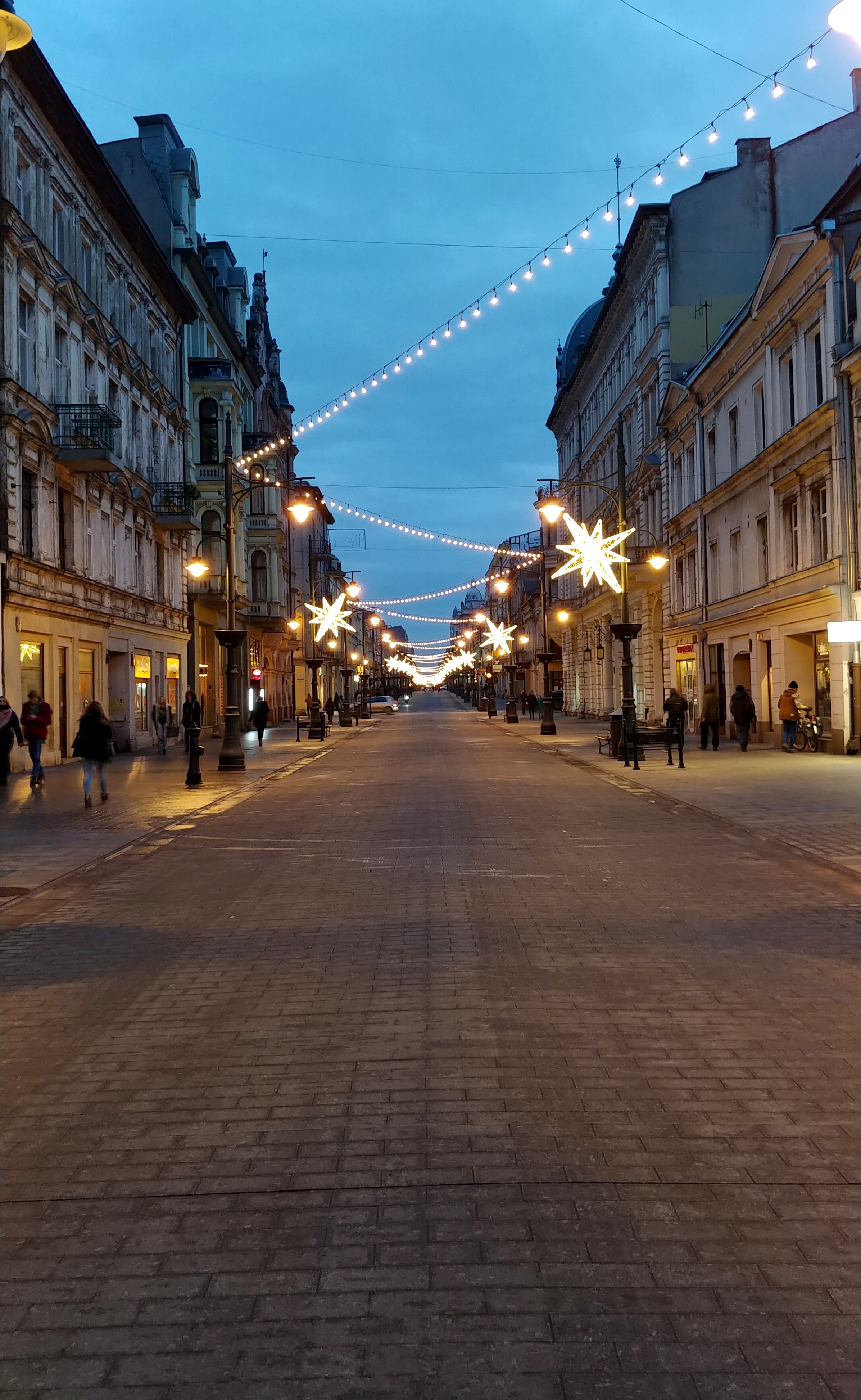
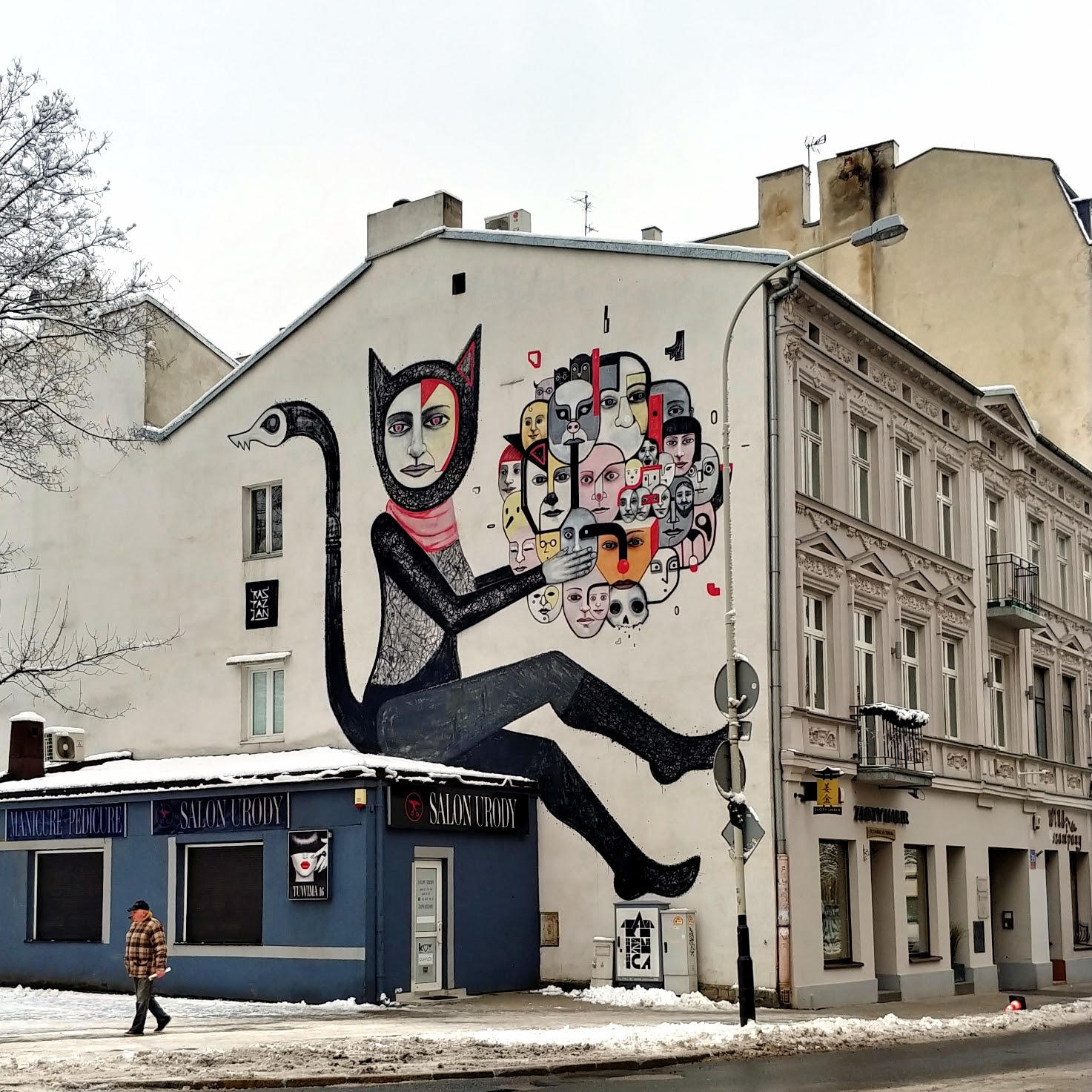
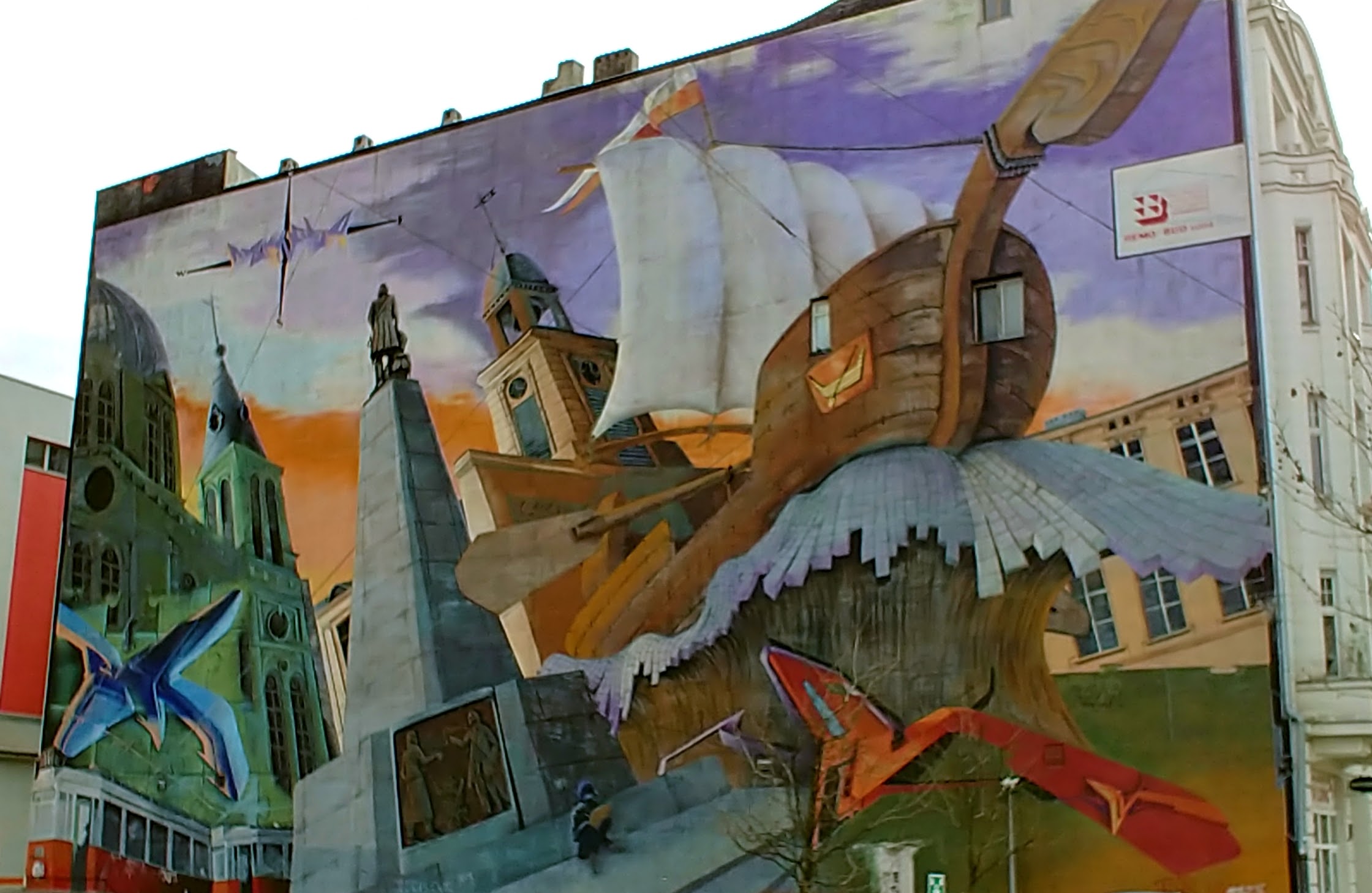

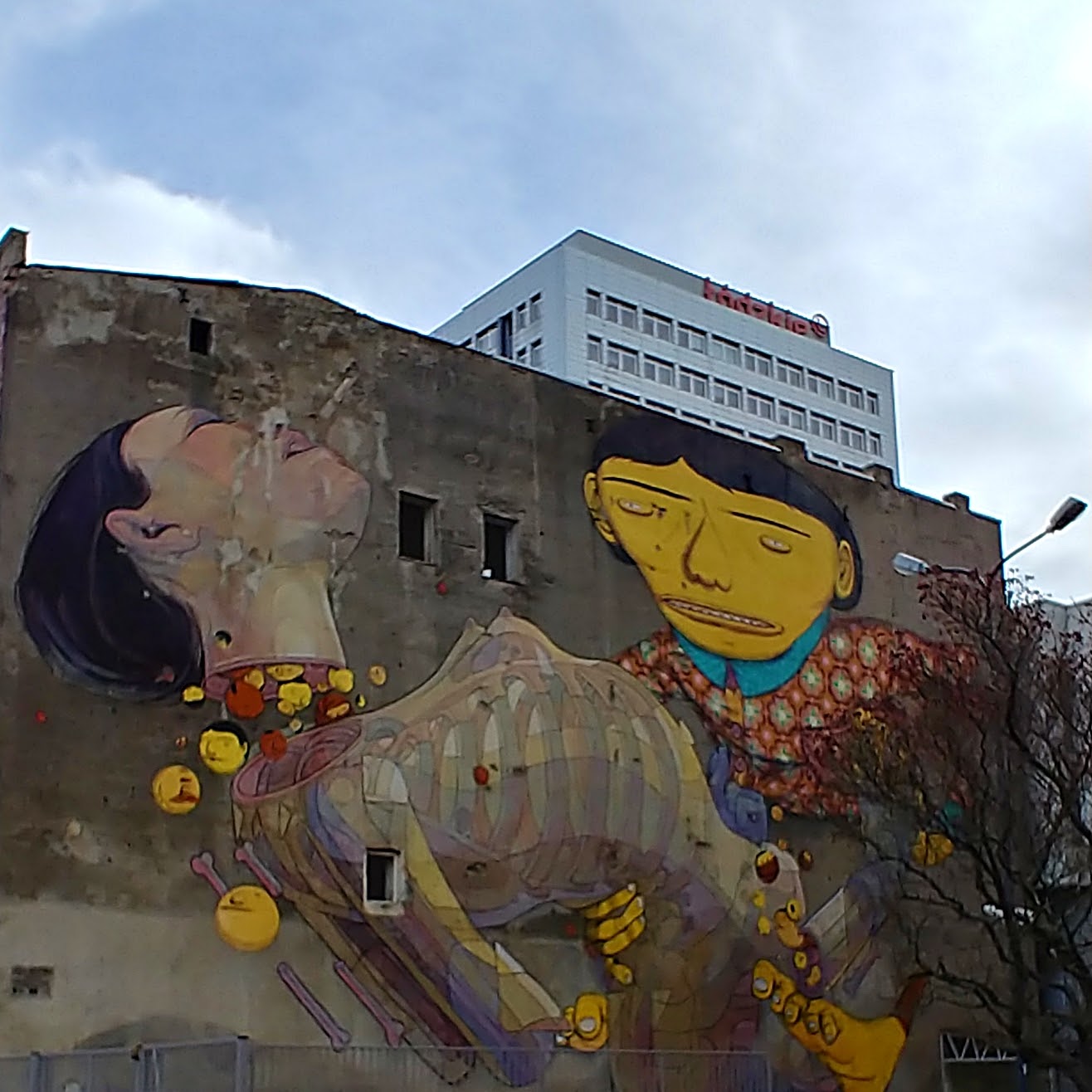
Two days before I was to leave Łódź, a staff at the hostel told me about Radegast Station and that if I had the chance to see it, I should. So, I made a plan to visit before leaving for my next city. The night before I went to see the station it rained, and when I woke up, the city was beautifully covered in a fresh blanket of snow.
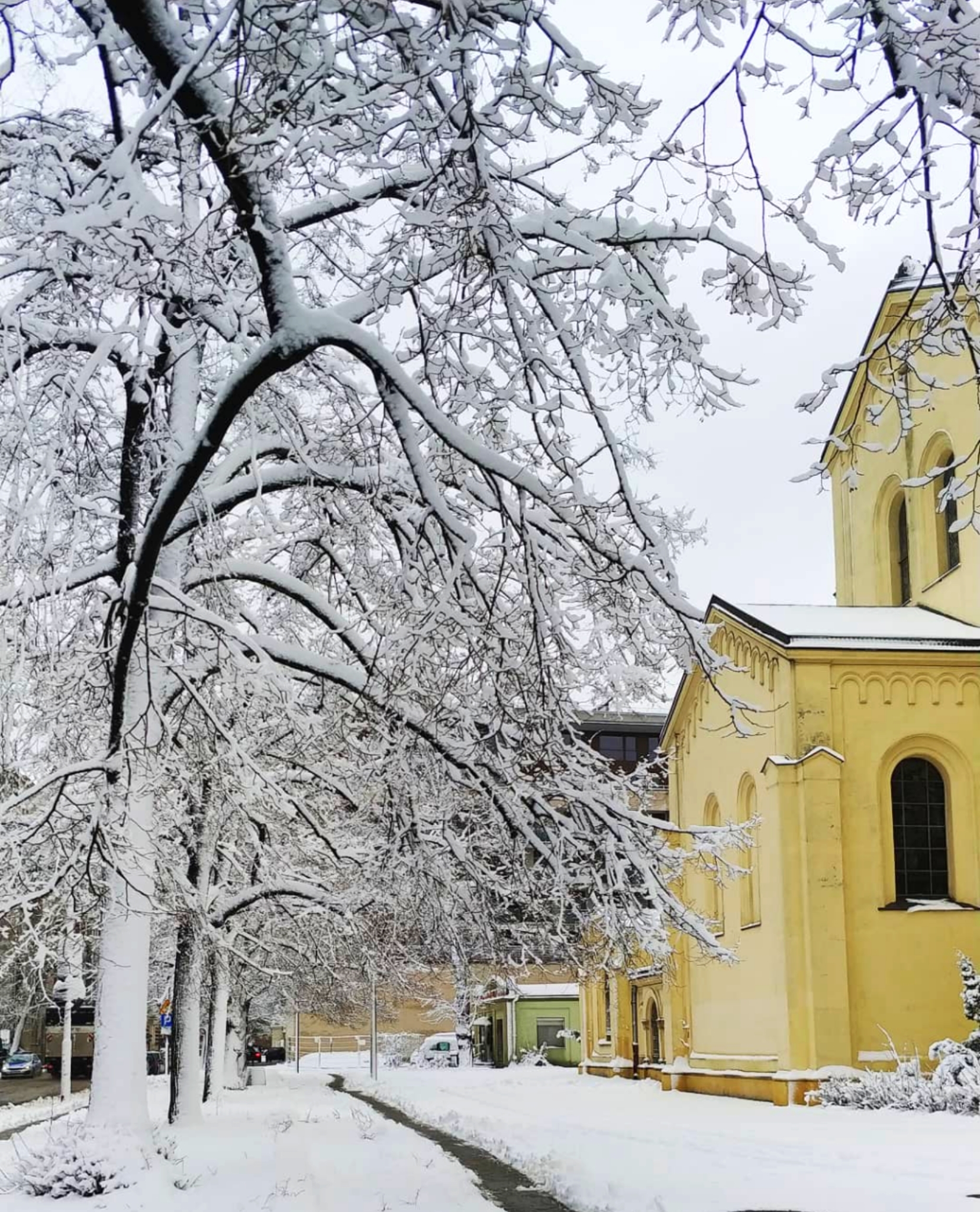
This was the perfect backdrop to what would end up being an intimate visit with a piece of history.
Radegast Station
First, a bit of history on Radegast Station. This was a place where around 200,000 Jews living in Łódź were placed in cars and sent to death camps throughout Germany and Poland (including Auschwitz). The station is preserved as a memorial.
Although it snowed several inches the night before, I walked 15 minutes to a tram stop, boarded a tram for a 20 minute ride, and then walked another 20 minutes to see this train station completely unsure if it would be open to visitors.
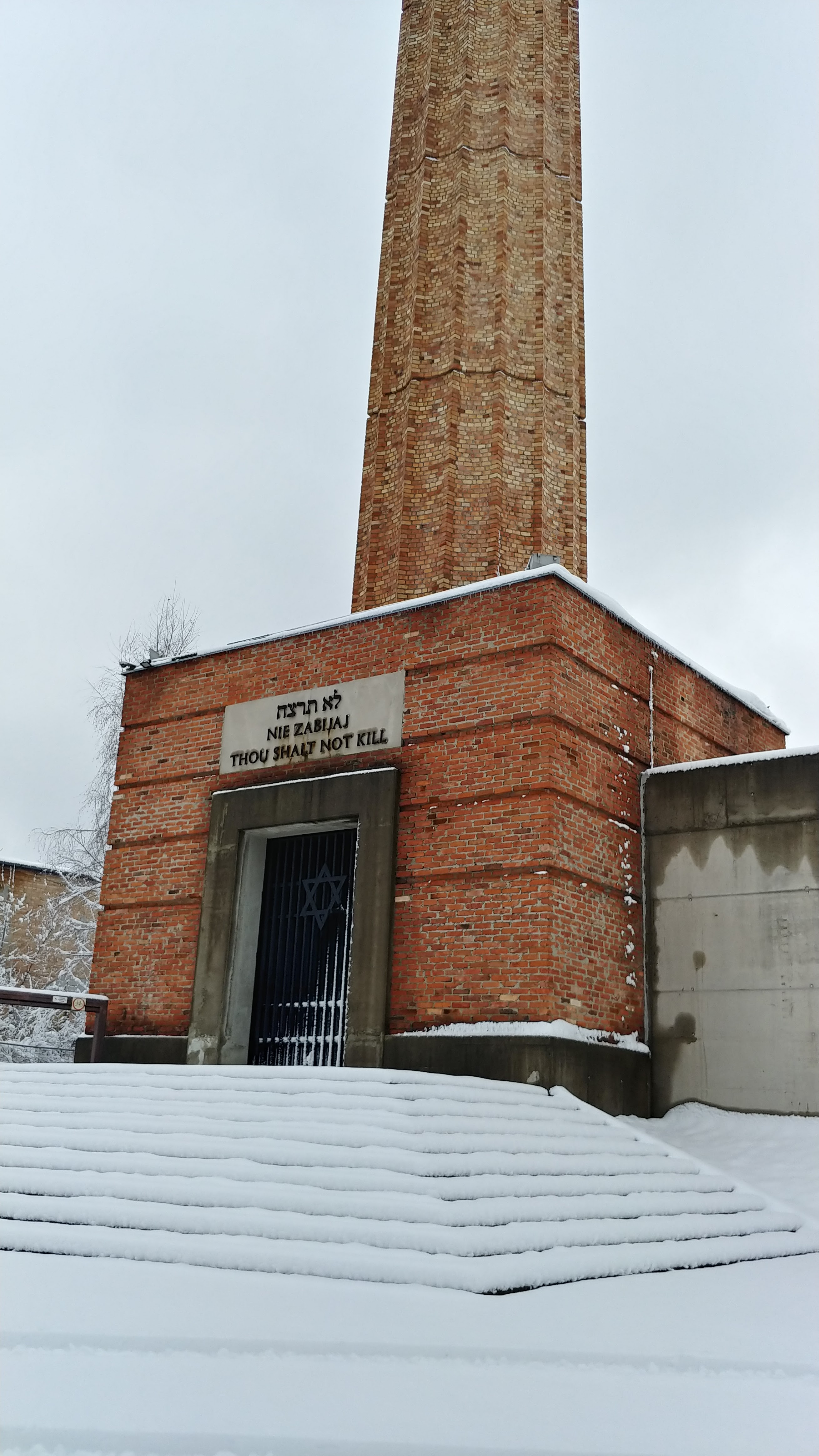
At some point while I was trying not to fall in the snow, I approached a large, towering memorial. On it the words Thou Shalt Not Kill were etched in three languages and the Star of David welded on the steel door below. The memorial was towering, snow-covered, and with no one around, the atmosphere was silent. I stood in the silence taking in the importance of this structure. At this point, I had forgotten about the cold and the snow.
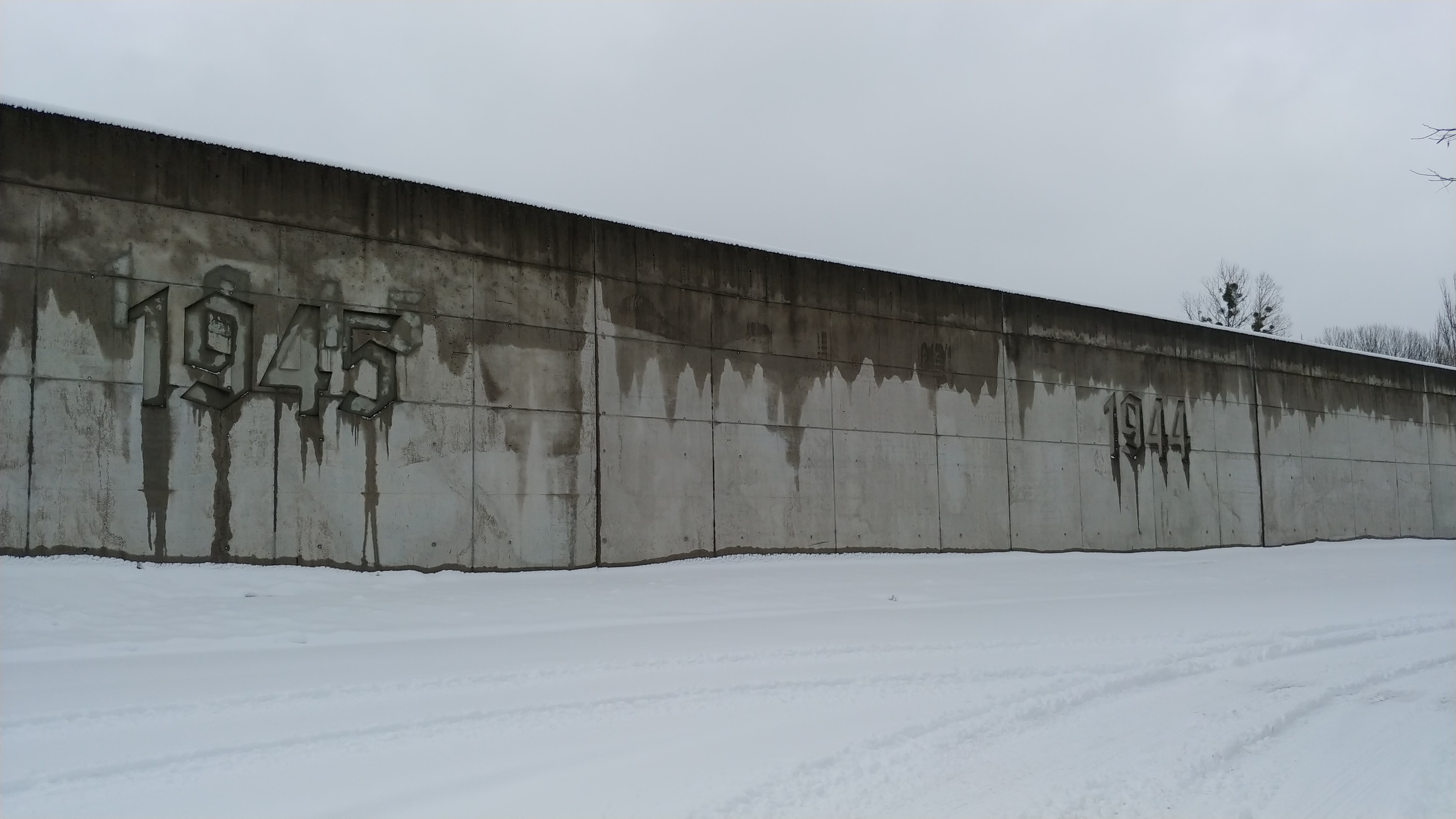
I followed the powerful wall that extended down the street, reading the dates as I passed them. 1945, 1944, etc. I knew what those years meant. Still in silence, I walked, respecting the importance of the moment.
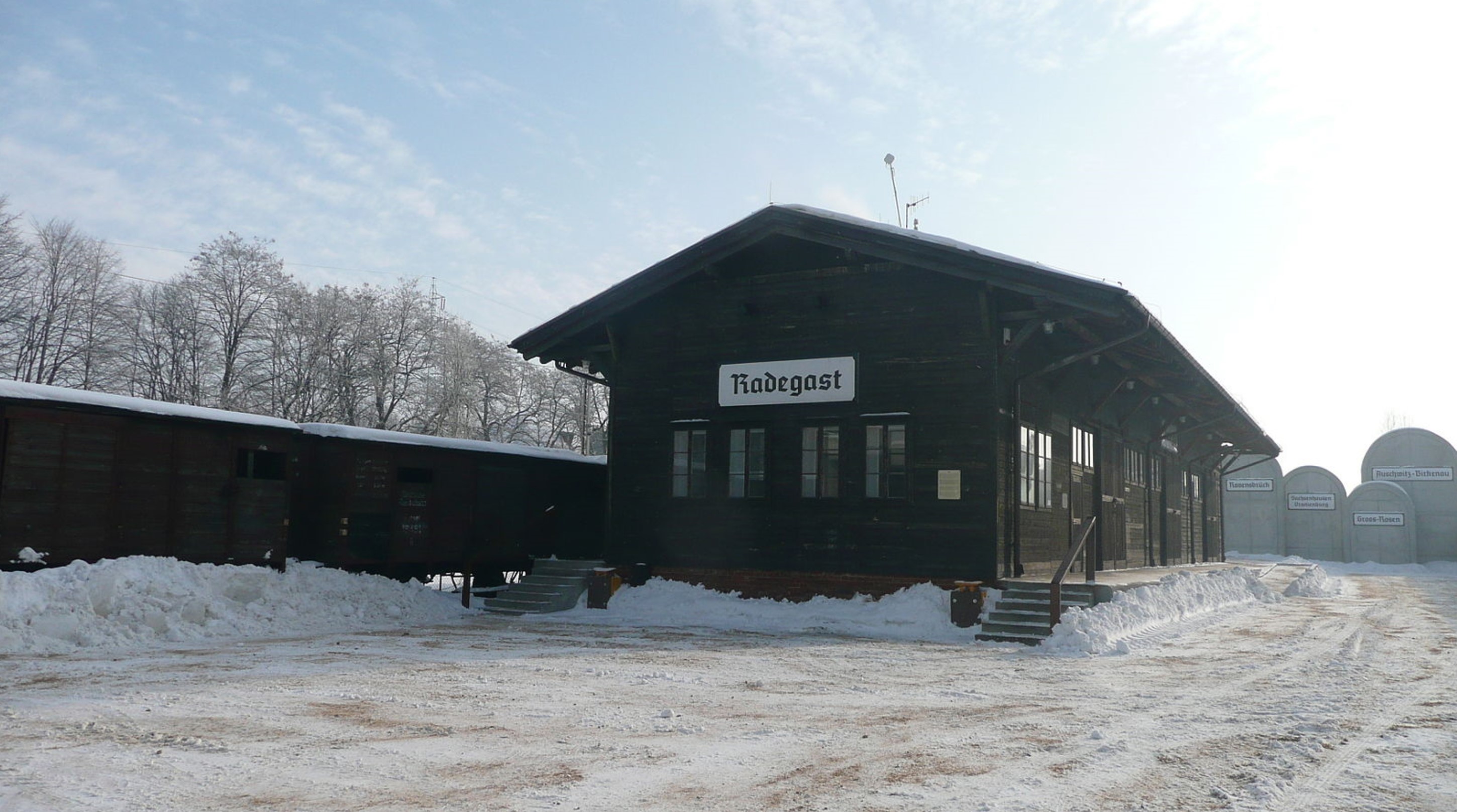
Just ahead was a small brown, wooden building with the a sign reading Radegast. As I approached the building, two things caught my attention. First, the gate was closed but not locked. Second, the walkway had been shoveled of snow. Since there was no lock on the gate, I did what every well meaning wanderer would do. I opened the gate, walked through, and politely shut it behind me.
A man then walked out of the station and advised that the station was closed until April for renovations, you know… in the spring. By the look on my face, I am sure he gathered that I would not be there in April and then asked where I was from. I told him what I was doing and where I was from and asked if I could look around even though it was closed. He said yes and answered some of my questions.
As we walked to the opposite side of the building, the three box cars stood out. They were original and one was open to stand in. These were the original box cars that took people to the work and death camps, the names of which were on monuments behind the station. Some names looked familiar. Treblinka, Stutthof, Auschwitz. The box car that was open had barb wire on the windows, scratches on the wood, scuffs on the floor. I’m not very tall and had to bend down slightly in some spots to not bump my head. Realizing that families, children, sat in these box cars for hours only to be taken to their death made me physically sick. I sat with that before leaving the station.
I only stayed at the station for 10 minutes. I need not stay any longer. The time I spent walking in the snow to stand and have a piece of history to myself was well worth it. Total silence. Me and the energy.
Below is an image of Radegast similar to how I saw it.
If the visit to Łódź taught me anything as the first happenstance decision of this journey it was that not knowing where you’re going and only knowing that you’re going forward will offer unexpected instances of confirmation that you’re where you’re supposed to be.
The next city I travel to will provide another exciting opportunity.
Next stop, Kielce.
- Have additional questions for me about my experience? Email me using the contact form.
- Check out additional pictures from my travels in the Digital Postcards.
 Wander Often